

At school, dyslexia is usually associated with difficulties in reading, writing, or spelling. But what becomes of it once someone enters the workforce?
Among adults, it often remains invisible. Many employees prefer to hide it, fearing they'll be seen as less rigorous, less quick, or less competent. Yet the strategies developed to work around these difficulties can also foster other strengths: big-picture thinking, creativity, strong adaptability, or a different way of approaching problems.
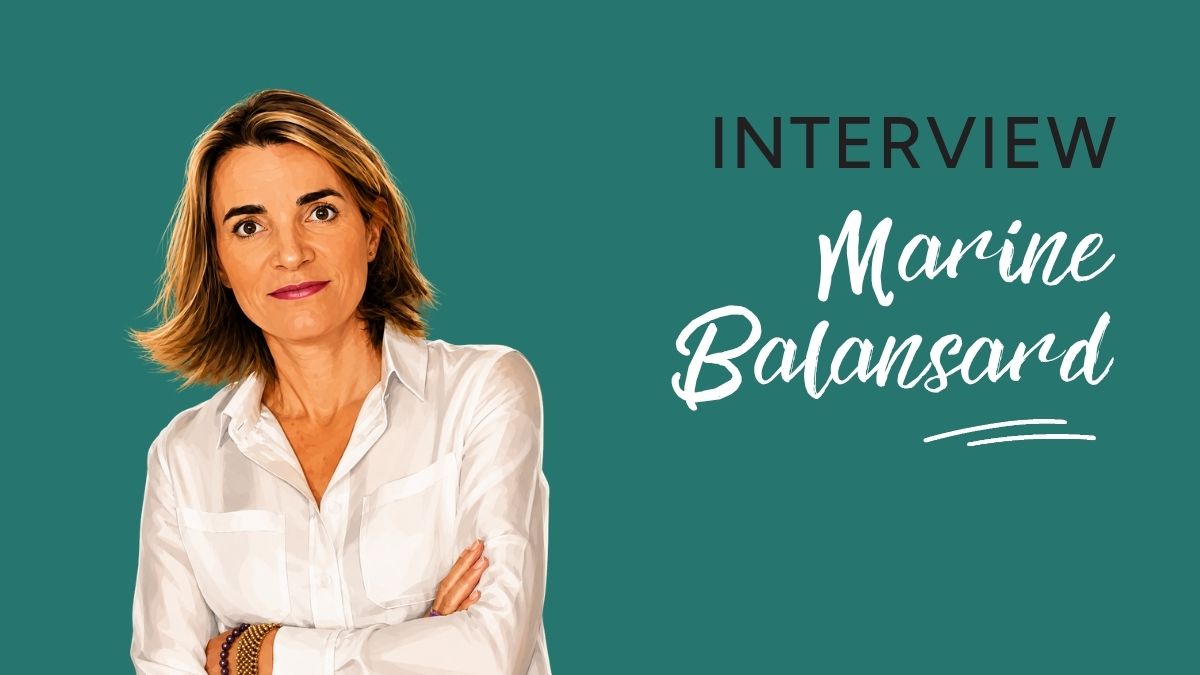
This shift in perspective is what Marine Balansard champions. She co-authored, with Quentin Bous, the book Les superpouvoirs des dyslexiques en entreprise – Transformer la différence en atout (published by Eyrolles). Designed as both a guide and a toolkit, the book draws on numerous testimonials to help readers better understand adult dyslexia and enable organizations to unlock talent that is still too often underestimated.
For this second interview in our series exploring dyslexia — featuring expert voices, executives, and personal testimonials alike — Marine Balansard looks back on her own career path, the obstacles she has identified in the workplace, and the concrete changes that managers and HR teams can put in place to better embrace cognitive diversity.
From Investment Banking to Neuro-Inclusion
How would you like to be introduced today: as an executive, an author, a decision-making expert, a neuro-inclusion advocate, or something else?
Today I define myself through my expertise in decision-making, leadership, and management. I spent many years in investment banking. I built my career in the capital markets, in a demanding environment with many collective and individual decisions made under pressure. What I take away from that experience is a strong focus on performance in decision-making.
You're not dyslexic yourself — why did you become interested in dyslexia? What's the connection to decision-making performance?
A decision becomes more robust when there's enough diversity at the deliberation stage. Diversity is often understood as diversity of gender, age, culture, or educational background. But cognitive diversity — simply a different way of perceiving and processing information — is almost always overlooked. Dyslexia is the most common form of cognitive diversity, and every organization is affected by it.
"The Superpowers of Dyslexics in Business": The Origins of a Book
Why did you want to write Les superpouvoirs des dyslexiques en entreprise?
It started with an article I wrote on the benefits of dyslexia at work for the French business newspaper Les Échos. The publisher Eyrolles reached out to me afterward and suggested I write a book on dyslexia in the workplace, together with a dyslexic co-author.
Who is the book aimed at primarily: dyslexic individuals, managers, HR teams, or executives?
It's a book for everyone: managers, executives, HR professionals, employees, but also parents or dyslexic students. It covers dyslexia at work, the everyday situations where dyslexic people struggle, potential solutions, and more broadly, a workplace policy that supports neurodiversity. Every manager in the 21st century should understand dyslexia and neurodiversity in general, along with what they mean for management practice.
Why did you choose the term "superpowers"? What are you trying to express with that word?
Dyslexic people know they have a real gift in certain areas — that's what I call superpowers. Some dyslexic entrepreneurs have built companies that were true game changers. I think of Steve Jobs and his sense of aesthetics, or IKEA's founder, whose highly pragmatic store model was later copied by competitors, Alinéa for example. The GCHQ, the UK's signals intelligence agency, has also recruited a large proportion of dyslexic people into its teams for a hundred years now, for specific abilities others simply don't have, such as pattern recognition.
The book draws on many testimonials from employees, managers, executives, and experts. What did you discover while gathering them?
I discovered a hidden world: that of dyslexic adults at work. I came away in awe of their resilience, their humor, and their ability to know themselves well and surround themselves with the right people.
Was there a particular testimonial or encounter that changed how you see things?
What really changed my perspective were the interviews with dyslexic people themselves. Some, despite tremendous professional success, are still marked by the uphill battle they fought at school, and almost dread the idea that their own children might be dyslexic. But the world is changing — dyslexia is far better understood and valued today (it's even a skill you can list on LinkedIn), and the tech-driven world we're moving into is quite favorable to dys-related strengths, especially creativity and systems thinking.
What are the main changes you'd like to see companies make as a result of this book?
I hope hiring processes and internal promotion pathways will change. Both are major stumbling blocks for dys profiles. Some candidates end up taking spelling dictation tests in front of an employer, like schoolchildren, even though they hold the equivalent of a doctorate. That's unacceptable. For promotions, companies need to actively encourage these employees to apply and to pursue further training. Finally, companies need to equip themselves to make reading and writing easier — immersive readers, the right screens, adapted fonts, AI tools — all of it should serve dyslexic employees, and all employees more broadly.
What Dyslexia Really Changes at Work
Why does dyslexia remain so invisible in the workplace, in your view?
I've asked many dyslexic people about this. The main reason they cite is a total lack of awareness about what dyslexia actually is. It's a difficulty automating reading and writing, with intelligence fully intact. For dyslexic employees, the simplest path, even today, is often to stay quiet and mask it, out of fear of being judged.
What kinds of work situations can be particularly demanding for a dyslexic person?
The hardest part for a dyslexic person is dealing with how much writing professional life now involves. Contrary to popular belief, there's more written communication than ever: emails sent to dozens of people, all kinds of reports, administrative overload. Since the rise of digital tools, we write constantly. Everyone is overloaded — and dyslexic employees even more so.
Conversely, what skills or ways of thinking can dyslexia foster at work?
It's well established that dyslexic people tend to be more imaginative, better at solving complex problems, and stronger at systems thinking. They're a real asset in anything related to innovation, product development, or strategy. They tend to be explorers, seeing further than what already exists.
Does dyslexia influence the way someone makes decisions, solves problems, or manages a project?
Yes — dyslexic people have often told me they're highly attuned to context, to organization, to the underlying purpose of a project and how it will unfold. So they pay close attention to overall coherence, to the collective effort, and they tend to spot potential sticking points quickly.
Glass Ceiling and Misconceptions: What's Still Holding People Back
You mention a "glass ceiling" for dyslexic people in the workplace. How does it show up in practice?
It shows up in two ways. On one hand, companies tend to promote people who fit the mold, to avoid taking any risks. On the other hand, dyslexic employees often censor themselves, fearing their dyslexia will become visible if they take on more responsibility. Even when they have all the skills and the motivation, they don't apply. It's up to the company to actively seek them out and encourage them.
What misconceptions about dyslexic employees do you still encounter most often?
There are two main ones. The most common is that a company assumes it has no dyslexic employees at all, and therefore wrongly believes the topic doesn't concern it. The second is the belief that dyslexic people don't put in the effort. In reality, it's the exact opposite — they put in twice the effort. These biases are widespread and damaging. Correcting them is work each of us needs to do on ourselves.
What can a manager do, very simply, to help dyslexic employees work under better conditions?
The first thing is to build psychological safety — the ability to be open about who you are without fearing sanctions, retaliation, or a shift in how people treat you. One dyslexic person told me that once her manager learned about her dyslexia, she started speaking to her differently, as if she were ill. That kind of ignorance is no longer acceptable in management today.
How can communication styles, meetings, or documents be adapted without singling out the person concerned?
It's actually quite simple, and these are habits that benefit everyone: being more concise in presentations, not handing out written documents at the last minute during meetings, and allowing the use of AI in various work situations — particularly where it excels, such as summarizing documents or meeting notes.
Does recognizing dyslexia necessarily require an official disclosure, or should companies design practices that are accessible to everyone by default?
In my view, a leader should do everything possible to help their employees engage and work effectively. If that means an immersive reading tool, a dedicated reading screen, or an in-house AI solution, then it shouldn't be a hard sell — and companies shouldn't wait for someone to "officially disclose" before acting. Many of these tools are useful for dyslexic people, but really, they're useful for everyone. After all, who doesn't use a spell checker? All these tools help people compensate, and help prevent burnout.
"Impossible Is Not Dyslexic": The Message to Remember
What would you say to a dyslexic adult who doesn't yet dare talk about their difficulties at work?
I'd tell them they're the best judge of what's right for them in their own professional environment. I'd also tell them that no one can simply guess that they're dyslexic. So each side needs to take a step: the dyslexic person, and the company too, which has its own obligations — such as having a disability liaison officer, for example. That creates a virtuous circle over time, and a benefit for the whole team, who can then talk openly about these topics and find better ways to work together.
What advice would you give a manager who discovers that a member of their team is dyslexic?
I'd give the same advice I give to all managers: take a genuine interest in the people on your team, understand their strengths and areas for growth, and learn their "instruction manual" so you can build lasting, collective performance. In very concrete terms, that means taking the time to talk with the person.
What advice would you give a dyslexic manager or executive leading their teams?
Dyslexic managers and executives do have a few distinct traits — notably, they tend to be very good at surrounding themselves with the right people, because they know themselves so well. They too need to share their own "instruction manual" with their team, so that everyone can find their place and help carry out the strategy the manager has set.
What message would you like to share with young dyslexic people who are wondering about their professional future today?
This century is very favorable to dyslexic people in the workplace (though not yet at school). So nothing is out of reach for them — no profession, no role is off-limits. AI and advances in technology can largely compensate for the traditional weak points of dyslexia, such as spelling and grammar.
If you had to sum up your message in a single sentence, what would it be?
"Impossible is not dyslexic!!!"
That's a phrase borrowed from Glenn Viel, the youngest three-Michelin-star chef, who wrote the foreword to our book. He's a model of success.