
The Science Behind Lili
What Lili Works On
Reading happens in two steps: the eye and brain first take in the visual shape of a word, then access its meaning. For many dyslexic readers, the first step is where letters crowd, overlap and compete. Lili's pulsed light supports this visual step, so the word arrives cleanly and reading can flow. Drag across the image to see the difference.

Without Lili

With Lili
From Discovery to Clinical Studies
2017
A Discovery in France
The original research into using pulsed light to support reading for people with dyslexia in Rennes.
2020
Creation of Lili for life
Recognized by the Académie
The Académie Nationale de Médecine, founded in 1820, recognized the interest of this research.
2022
Launch of the first Lili lamp
2026
Launch of the Lili Screen
Independent Clinical Study
An independent clinical study with the CNRS and the Robert Debré University Hospital, led by Maria Pia Bucci.
Most Rigorous Scientific Protocol
2 Strict Clinical Studies
Two randomised, double-blind clinical studies were conducted between 2025 and 2026 to scientifically measure:
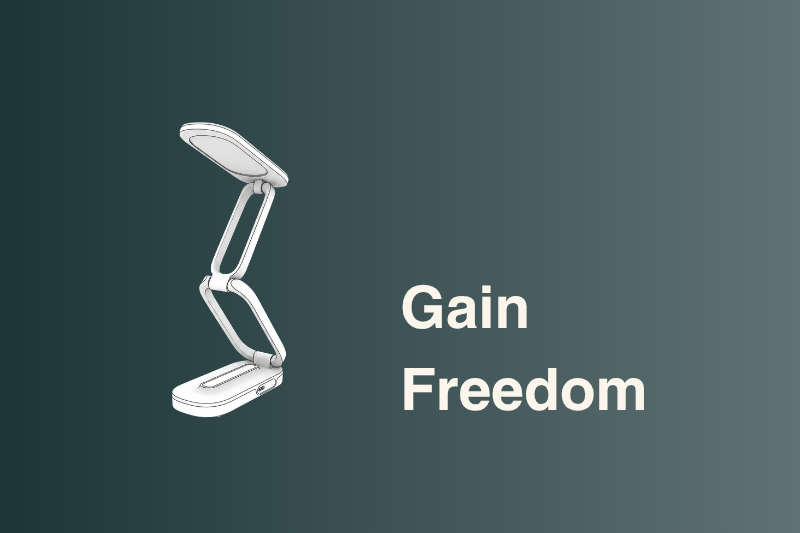
- the effects of the LILI lamp on children
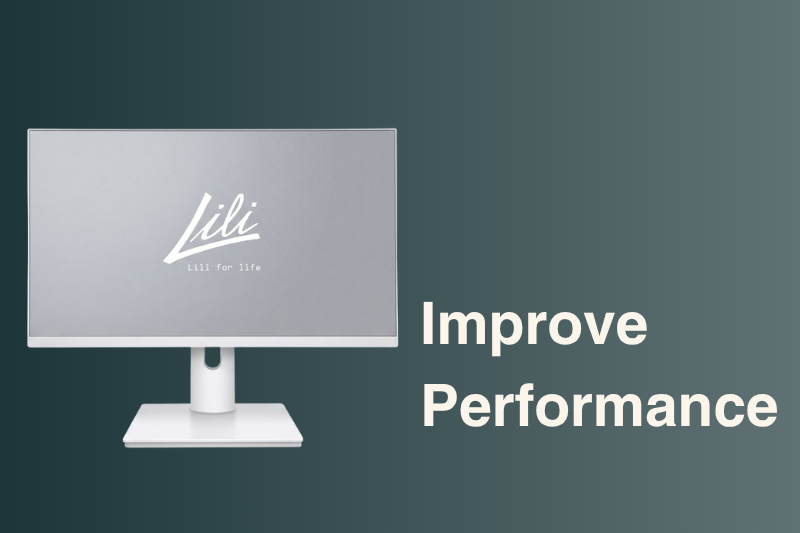
- the effects of the LILI screen on adults
Clinical Studies Objectives
Led by Maria Pia Bucci's research team (CNRS, Robert Debré University Hospital), various assessments were carried out:
- Speech and language evaluations
- Visual-attentional tests
- Voice recordings and an eye-tracking system
A Rigorous Double Blind Methodology
Since Lili's pulsed light is completely invisible to the naked eye, participants do not know whether the treatment is turned on or off during testing. This strict protocol enables an objective comparison and scientifically rules out any placebo effect.
The study protocols are available on clinical trial registries:
ISRCTN21209189, ISRCTN14080164.
What the Study Found
Measured with the technology on and off, on the same readers and the same texts.
On at least one reading measure, across children and adults.
Adult understanding grows with use.
Faster, easier decoding on tested adults.
Children almost double the understanding.
Children read faster and decode easier common words.
* Results from clinical studies with the CNRS and Robert Debré University Hospital, on dyslexic children and adults. Results being prepared for peer-reviewed publication, expected end 2026. Individual results may vary.
Lili is a reading-comfort technology, not a medical device or a treatment. It is designed to complement speech therapy and educational support, never to replace them.
Our clinical study is complete. Its results are being prepared for publication in a peer-reviewed journal, expected in 2026.
See how it works on The Technology Behind Lili, or discover the Lili Lamp and Lili Screen.