





Why is the Dyslexic Reader the ultimate word ultra-trailer?
Opening a book is no simple Sunday stroll. For a dyslexic reader, or rather, a true dyslexic runner, tackling a page of text is like standing at the starting line of the Ultra-Trail du Mont-Blanc (UTMB).
There are dizzying elevation gains from the very first lines, where every syllable feels like climbing the Col du Bonhomme in a pouring rain. There is that deep solitude, those moments of doubt in the middle of the night when you wonder if you'll give up at the next chapter, crushed by discouragement and cognitive fatigue. But there is also the ultimate reward: the unique ability of the dyslexic brain to take in the landscape, perceiving 360 degree panoramas of ideas with extraordinary creativity and global vision.
Because dyslexia is not an obstacle, but another form of intelligence built for the highest peaks, here are 5 cutting-edge tools to cross the finish line of words without burning out.
1. The 20-20-20 aid station break: The art of pulling into the pit stop
At kilometer 70 of the UTMB, skipping an aid station guarantees a crash. In the middle of climbing a paragraph, the dyslexic runner is so focused on the trail that they forget to blink. The result: dry eyes, blurry vision, and guaranteed visual fatigue.
The champion's protocol: Every 20 minutes, look up from your book and focus on a point 20 feet (about 6 meters) away for 20 seconds.
The booster effect: You relax the eye's accommodation muscles, rehydrate the cornea, and set off with a fresh mind to tackle the next climb.
2. Typography and contrast: marking the course
Running along steep ridges in dense fog without trail markers is a recipe for disaster. Reading jet-black text on ice-white paper creates an aggressive glare that needlessly tires the visual system.
The softened race line: Opt for tinted backgrounds (ivory, cream, sepia) that absorb light and reduce visual shock.
High-visibility scanning: On an e-reader or screen, use specialized fonts like OpenDyslexic or Lexie Readable. Their bottom-weighted letters keep words from slipping on the descents and stabilize your visual stride.
3. Pulsed light: the external metronome for extreme trail runners
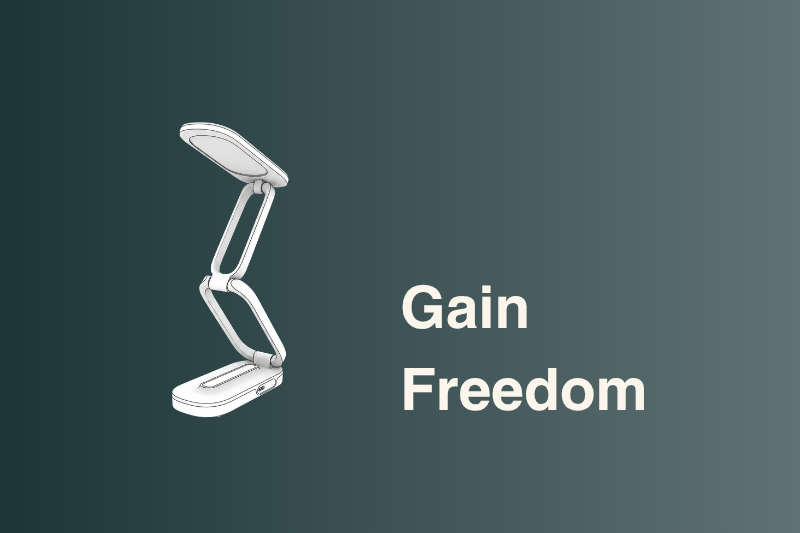
When legs give out and heart rates soar on steep inclines, trail runners rely on the steady rhythm of their poles or an auditory cadence to maintain momentum without exhausting themselves. In reading, pulsed light plays that exact conductor role (read here)
The cadence principle: Emitting light flashes invisible to the naked eye, pulsed light technology acts as an external metronome for the brain.
Perfect synchronization: It helps resynchronize visual and brain information processing. Signals become clear, attentional effort drops, and the brain regains a smooth rhythm, saving precious energy to go the full distance.
4. The visual guide: running with a line pacer
In ultra-endurance events, a pacer runs alongside the athlete to set the tempo and keep them from losing the trail in the dark. On the page, the dyslexic runner's eye also needs a guide to avoid stumbling from line to line or needlessly backtracking.
On paper: Use your index finger, a colored bookmark, or a reading ruler as a physical guide under the line.
On screen: Enable a reading mask or line tracker. You stay on track, streamline your path, and avoid time-consuming regressions.
5. Bimodal reading: lean on your support crew!
No one wins the UTMB completely solo: there is always an extraordinary support crew at checkpoints to refuel, encourage, and boost morale. Bimodal reading is your built-in support crew! It combines sight (text) and sound (audiobook).
The drafting effect: The narration handles the heavy lifting of decoding and sets the tempo, while your eyes take in the scenery of the story.
The energy gain: Mental fatigue plummets, frustration disappears, and you devour miles of pages at unprecedented speed and enjoyment.
Arriving in Chamonix: the victory of a different kind of intelligence
Every chapter finished by a dyslexic runner is a feat of endurance worthy of the crowd's cheers at the finish line. The solitude of the reader facing the page and the fear of running out of steam fade as soon as the right preparation and tech tools are put to work.
Dyslexia is not a weakness: it is the hallmark of exceptional runners capable of traversing terrains that others wouldn't even imagine. Guided by smooth visual tracking, backed by an audio support crew, and paced by the precision of pulsed light, you are ready to conquer literature's finest summits. Enjoy the run through the words!